

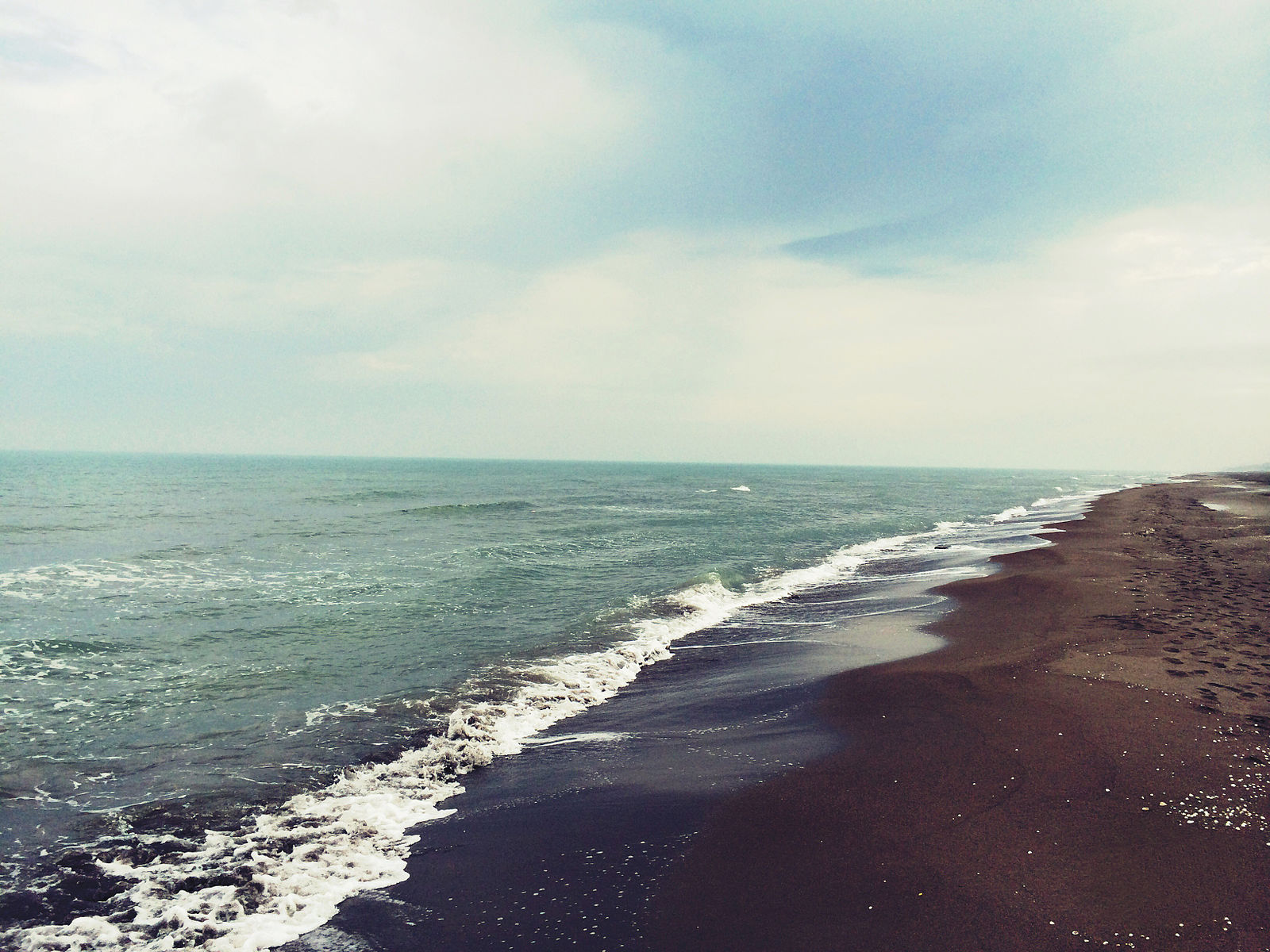
Yes, I always did want to witness the Caspian Sea, the Black Sea, inland China, Bali, Uruguay, the Congo. I wanted to ride the entire Trans-Siberian Railway. I wanted to see everything, go everywhere. I used to think this was possible. Recently, though, I’ve watched my world both shrink and expand in interesting ways.
I’m not big on resolutions, probably because I cannot maintain them for very long, and also because I usually pile on too many, feel overwhelmed by all the imperfections and faults I wish to change about myself. This year, though, I picked one thing—something that makes more than enough sense as I approach (loud, audible, painful swallow) age forty: money. I’ve never been great with money. Why? Because I have never been good with numbers, because I’ve never made very much of it (except for those three years I posed as an “engineer”), and because I want to experience everything. The math I was doing in my head was bad, was full of errors and oversights. There were also long stretches of time when I had so little money I couldn’t save any extra, so I developed a cavalier attitude about it. As in: what difference does it make if I buy this book or this coffee if I can’t save anything anyway?
In truth, I could have saved during most of those times (excluding that year I was on food stamps, there was nothing to be saved then). It wouldn’t have amounted to very much, but it would have been something—most certainly, it would have amounted to proof that small numbers do eventually become bigger numbers, even if really, really slowly. But more than I was buying cappuccinos I should have abstained from, I was distracted by images of the Caspian Sea, cloud forests in Tennessee and Ecuador, volcanic lakes in Guatemala, the granite peaks of the Alps. I’ve seen some of these aforementioned things, but not all of them. I’ve always lived fairly cheaply (I wear clothes until they’re threadbare), but I’ve certainly traveled beyond my means (even though my travel budget was always on a shoestring). I’ve knowingly, willingly, gone into debt to see some of the world, to leave home, to be someplace I would never be able to imagine.
Do I regret it? No. I do not. How could I? What’s done is done, and further, none of that travel was frivolous, and all of it taught me something. Now, though, I haven’t left the United States since 2017—that summer I both lived in a treehouse in Guatemala and visited Denmark for a friend’s 40th birthday. Then I waited tables for a few years and lacked the funds, then COVID and no travel. Since COVID, I used all my travel time and money to fly to Tacoma, Washington during the summer for graduate school.
Much of my earlier, more travel-oriented life, was so shaped by a lack of money it’s almost cringe-worthy; if I’d paused long enough to ask a few intelligent questions about how to use money, I might have saved myself a lot of trouble. But I hated money so much, I hated the limitations it put on me, I hated how there was never enough, so I foolishly resisted paying any more attention to it than I felt I needed to. I’ve lived all over the US, and in every city I was always working an odd conglomeration of jobs to pay the bills. I’ve lived abroad, too, for as long as I could manage. I recall when I lived in Guayaquil: lining my bra and underwear with cash from my paycheck, walking to the supermarket where I’d go to the bathroom and remove all the cash and put it in a neat pile, and then waiting in line at the Western Union booth, wiring the money to my mother so she could deposit it in my checking account, and I could pay my student loans.
When I wasn’t working in Guayaquil, or working three jobs in Portland and Seattle, I filled my time with frenetic, close-range travel, suspicious always of time’s endlessly ticking clock, certain its gears would splinter to a halt before I’d seen it all (they will!). My bad math said “little trips are cheaper”, but failed to add up those dozens of little trips, and so I was still always running out of money. I hiked every weekend in the northwest, went on four hour drives just to see a lake or a stream. When I lived in Ecuador I traveled around its countryside, went to the sea, the capitol, the Amazon, even to Colombia, once, when I had more time, desperate to see as much as I could while I was there. But I got tired of all that movement, working multiple jobs, or the absurd amount of effort required to get money stateside to pay bills. I recall sitting at a street cafe in Medellín one morning, eating a guava pastry and drinking instant coffee, and thinking: I just want to go home. I wanted to be in one place for a long time. I wanted to not have to figure out a new bus system or city map every year or two. I wanted to save up money to fly someplace else, and not back to Buffalo. That moment occurred over twelve years ago; I tried, but life is full of unexpected turns, and it took me nine years to get home.
But here I am, now, home, for three-and-a-half years. Enter my money resolution, along with the realities of time, and space. On December 28th, I signed up for a financial management service. I entered all my account info, and I watched the service build out charts for me, connecting debts in one area to savings in another. Suddenly, being able to see it all, both in numbers and pictures, in one place, it became clear to me: No, I would not stand before the Caspian Sea in this lifetime.
I am forty, nearly. I want to visit family in Ireland. I want to see Pablo Neruda’s houses in Santiago and Valparaíso, Chile, go to Nicaragua’s festival of poetry. I want to do more camping in the woods of New York, Pennsylvania, maybe Ontario too. I want to hike the Paradise Trail around Mount Rainier again, on a clear day. I want to see the giant Sequoia, Grand Teton, the Grand Canyon, and the Platte River in Nebraska. I want to spend time with my family here in Buffalo and in New Hampshire and Massachusetts and Georgia. I want to spend time with my friends here and in Rhode Island, Washington, Oklahoma, California, Maine. I want time to write and paint when I’m done with work. I want to eat well and buy good food. I want to read more books than I already have time for. I want both stability and the possibility for a future change in my career, if I deem such change is warranted. I want to fix up my kitchen. These are all things I want more than I want to travel to the Caspian Sea. More than I want to travel to a lot of places. And they all cost money.
Considering, honestly, my money resolution (which is, basically, to save as much as possible), forces me to consider what is actually realistic for me (rather than what I wish was realistic, a long-standing fault of mine). I am a public school teacher with additional skillsets and interests that aren’t exactly lucrative in our time. I have too many passions and hobbies to bother with a “side hustle” (as in: I already devote too many of my precious living hours to “work”). I do not come from money, nor do I have any high-society contacts or affiliations. When I did briefly have more money, I didn’t save it so much as put it to use: I paid off my mountain of student loans, I bought a house, I fixed said house’s leaky basement and ancient bathroom. So, I traded bad debt for good debt. I traded a longing for the road for the comfort of home—something I hadn’t known in a long time. But my point: I have a mortgage, a modest salary, an un-ignorable preference for good (ie: expensive) food, all the other costs of adulthood, and a lot of pink and turquoise charts telling me how much, realistically, I can afford to spend on things like travel (if I want to not go into debt, eat well, have some savings, and not have to work until the age of eighty).
And it isn’t enough to see the Caspian Sea. It isn’t enough to go to a lot of the places I’d once dreamt of traveling to. Upon realizing this, my world didn’t feel shattered, though. These constraints, strangely, felt invigorating. I’ll have to choose wisely, I realized, a thrum of excitement plucking its way through me. It’ll focus my interests, I thought, recalling all the nearby travel I’ve neglected to save for more distant locales. Finally, I do not have eternity, as much as I try to delude myself into thinking I do. This will ground me, was my summative thought, examining my money charts, in a good way. Fooling myself into thinking I have an eternity encourages the wasting of time, of resources, and it tips me toward fantasizing about a future I do not actually have instead of engaging more meaningfully in the present. My time is limited, just like my finances. But constraints do not always have to be suffocating, I remember, they can spur creativity, too.
Money is pretty damn boring, to me (though the colorful charts in my app do help: I’m now fiercely determined to watch the pink line climb as I find ways to cut costs and save for what matters the most). But it’s also necessary. Whether we like it or not, think it’s evil or wonderful, it’s necessary in our society at present. I think 40 is a decent age (not good, not great, just decent) to finally accept one’s financial reality, and then figure out how to make it work. Be creative. Be selective. Stay present. This isn’t to say it’s impossible some change might come in the future that permits me to visit the good old Caspian Sea; I know that all kinds of unexpected things can happen. But, I also know acceptance is the only real place to start—I don’t have to like it, just accept it. And then I can make the necessary changes to make it work. Because money, like time, is a resource, and I’ll never have enough of either to see and do everything I want. But if I’m a touch more careful than frivolous, I might just be able to save enough (money, and time) for what I really, really want to see, to do, in this life.
 wildmind.space
Leave a comment